
2025 Top Books & More
Yes, my usual rant about reading recurs before rolling out my most riveting reads. You can skip past it if you desire to, but you may miss a few gems. As always, these selections are not necessarily new, but they were new to me. This year I have included a favorite film, album, and article as well. Thanks for taking the time to read this. Enjoy!
Yearly REFLECTIONS
THE RUDDER OF READING
In 2025, I read fewer books for personal/spiritual development and pleasure than I have in five years. Responsibilities at home, work, and school stole away my capacity, and I gave a lot of precious reading time to preparations for my comprehensive exams this December. Finding time to sit my brain and body down for uninterrupted engagement with books felt like a fight. After twelve months of that battle, I am still convinced “The Doctor,” Martyn Lloyd-Jones, was right; fighting for reading is fighting for life. Any fruit I have borne for the Lord’s sake and my little world’s good have been because of these six constants in my life: my union with Christ, the love and support of my wife, the nourishment of my local church, my wonderful family, long-lasting friendships, and consistently reading substantive books for the last ten years.
I can justify reading’s inclusion on this list through two trajectory-changing choices with the influence of books smeared all over them. In August 2013, days before the beginning of my senior year of high school, I became a Christian while sitting under the preaching of the pastor of the church I attended my whole life. Through the message of the gospel, God pierced my soul and reconstructed everything about me from the heart up. I am so thankful the gospel was clearly and powerfully preached to me in the church I grew up in, and my spiritual life has been profoundly shaped by the deep passion for communion with God and the expectation that God shows up when his people gather that flourished in the Pentecostal tradition I was raised in. I owe so much to my church and spiritual heritage.
But within a few months of my salvation, I struggled to find adequate language for what happened to me. I needed someone to articulate conversion to me in a way that met the reality of soul-transformation I had experienced at the very root of my desires. I now had an inexhaustible taste for God after thinking, for years, that God at his best was as uncaptivating as an infomercial. What changed? The brilliance of the Bible’s teaching on what happens in conversion came to me through an unanticipated meeting. Alongside friends ready to worship and hear dynamic preachers inspire us for Jesus during the opening days of 2015, I slumped down in my chair as an old, tweed-jacket clad figure slowly and silently ascended the steps with Bible in hand to speak to 50,000 young people assembled for Louie Giglio’s Passion Conference. What in the world was this old man going to ramble on about for fifty minutes?
Those fifty-four minutes were life-altering. In the sermon (see timestamp at 29 minutes), John Piper answered the question I longed for someone to illuminate. What happened to me when I went from no taste to taste? In other words, what is at the root of conversion? He answered it with a shockingly blunt answer from 2 Corinthians 4:6: “For God, who said, ‘Let light shine out of darkness,’ has shone in our hearts to give the light of the knowledge of the glory of God in the face of Jesus Christ.” The absolute, sovereign grace of God trespassed into my dark and defiant heart with the light of Jesus’ face, the very glory of God himself. I was given spiritual sight! Spiritual tastebuds! I was given a spiritual acuity that turned my affections to the beauty of Jesus as much as to the truth of Jesus.
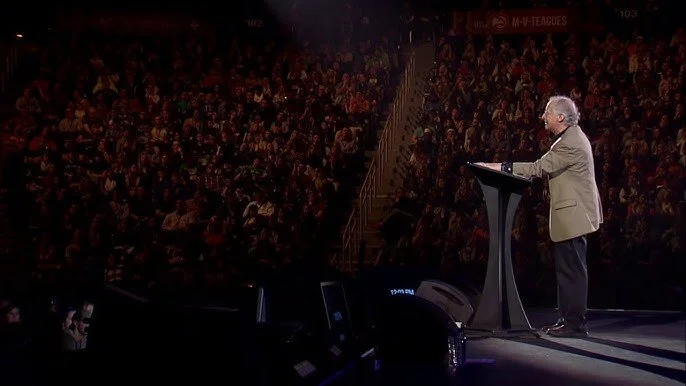
John Piper at Passion Conference 2015
Piper never attempted to entertain me. He unleashed the Bible and let the words and phrases sink my little view of God like a ship. That encounter sent me down a road of books starting with his classic Desiring God. I can remember sitting on the floor of my room in my parents' house taking hours to work through a couple of pages, sometimes trembling with a pit in my stomach scared to believe what I just read. The vision of reality presented from the Bible in that book rearranged everything I thought I knew about God and my life. It is unthinkable to imagine where my worldview would be without that old man and his books intruding into my world at nineteen years old.
The discovery of a deep, rich, and, in my judgment, biblically faithful tradition of Christian theology through John Piper led me to a constellation of books spanning hundreds of years. Amidst the many recenterings this stream of theology was working in me, the necessity and nature of the local church became one of them. Book after book, from Piper’s The Pleasures of God to Bonhoeffer’s Life Together, emphasized the centrality of the local church to the beauty of Christianity and the plan of God. As for me, I had never even asked what a local church is according to the Bible. I began to want a community with the same theological outlook and conviction about the local church as the primary vehicle of God's mission.
I had a handle on the theology, books could do a lot of the heavy lifting there. But books led me to what I could not get from them: the lived-experience of New Testament, Spirit-orchestrated, Christ-exalting community within a local church that loves God and loves neighbor with serious joy. Natalie and I showed up to Generations as newlyweds in August of 2018 looking for what the books told us about. Now, more than seven years later, we and a host of other believers have committed our lives to embodying Christ's presence together in a particular place at a particular time in our small sliver of history. I believe we will remember these years as some of the best of our lives. Choosing Generations as our local church has been the most pivotal decision of our lives after becoming Christians. We owe this to books that pushed us to take the Bible seriously about what a church is.
Ten years later, stirrings from the Gospel of Matthew and too much time reading the stories and journals of 18th century Baptists who pioneered modern missions has sent me towards following their path. Reading everything I could get my hands on by or about a relatively unknown Baptist pastor named Samuel Pearce (1766-1799) was some of the most important times of meditation in my entire Christian life. Pearce’s heart for the world and support of his friends like William Carey bothered me into action. Books can change your life. They are a dangerous technology. I can trace what I consider to be eternally important decisions about what church to give my life to, then and now, to the influence of words printed on pages that my eyes, mind, and heart sat in front of for a while. In another decade, what texts will take me to new places? Reading has been a rudder that has steered me to unforseen destinations I am so thankful for.
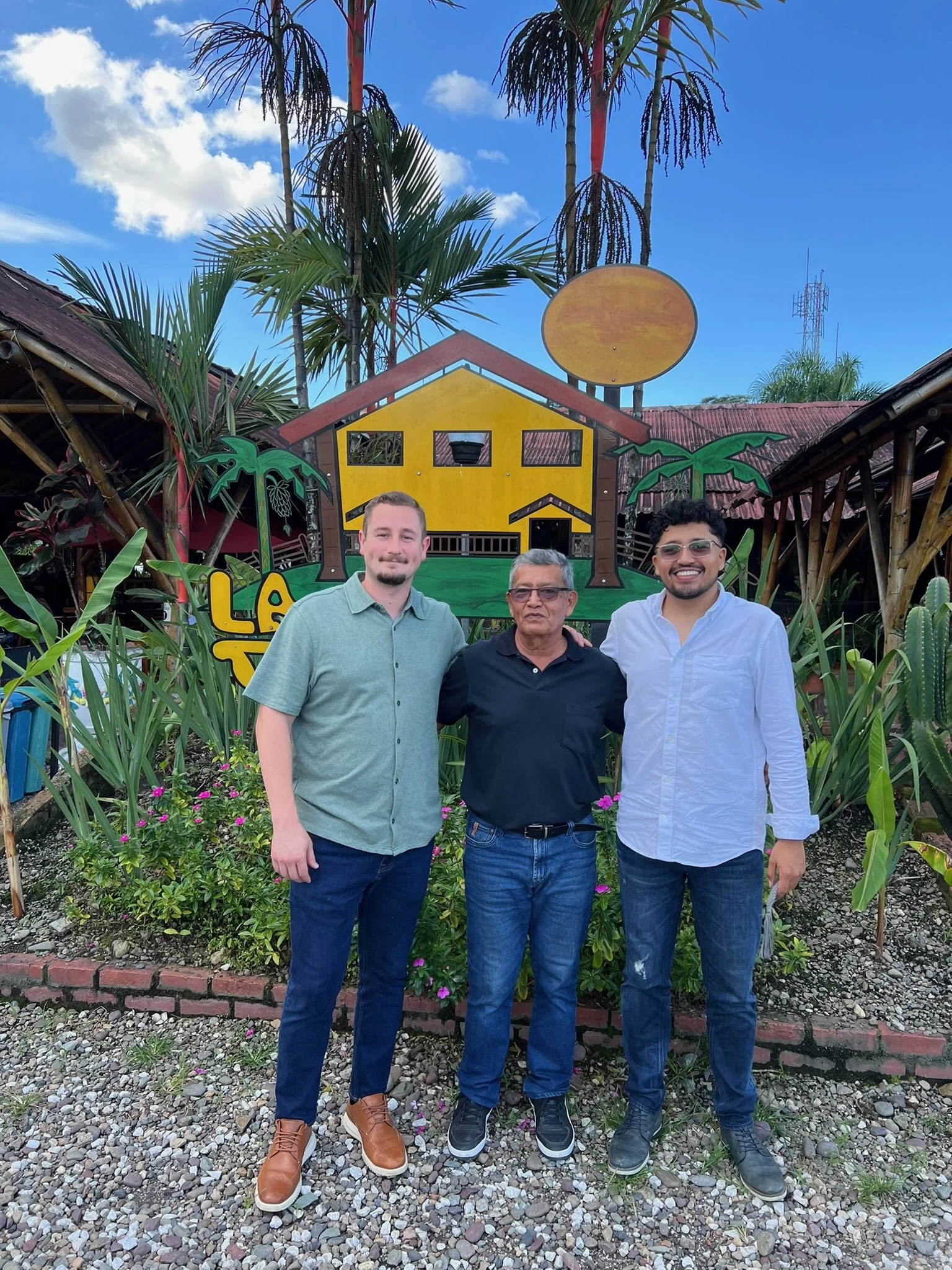
Here I am with pastor Walter and his father, Isaías, the pastor and pastor emeritus of the church we hope to give ourselves to for the sake of the gospel in Colombia.
A WORLD WORKING AGAINST US
Formation that leads to action cannot happen without textual time under tension. This matters for Bible reading. The Scriptures “cannot get into our hearts unless they go through our eyes and ears first.” God has chosen to rely on language (words, grammar, syntax) to communicate his truth, so we have an obligation to give ourselves to understanding language. If we are lousy readers or non-readers, our Bible reading and its transformative effects by the power of the Holy Spirit will suffer. I have increasingly tooted this horn over the last few years. It is the most powerful and omnipresent challenge to Christian discipleship in our lifetime. The digital slave trade of our minds is at full peak. Our brains are chained by digital platforms and gadgets built on economic systems incentivized to keep us online for as long as possible.
We have been naturalized into pinball thinking, bouncing from digital stimulation to stimulation. If we read at all, this is the habitat of reading we are most comfortable in. Books (even Bibles) on white pages bound together without swirling stimuli around it feel unnatural. Many, especially young people, see the experience of reading physical books as prehistoric. I won’t belabor the point, but declines in reading and reading ability are a big deal (see here, here, and here). Ray Bradbury and his prophetic Fahrenheit 451 give ever-increasing oracles of truth: “You don’t have to burn books to destroy a culture. Just get people to stop reading them.”
THE FIGHT FOR AN INNER LIFE
My advice? Rebel against all of the forces working against the formation of an inner life. The main character of Bradbury’s Fahrenheit 451, Guy Montag, literally burns books on behalf of the state in the story, never questioning his orders or the ideologies behind them. It is not until meeting a free and liberated mind, a sharp woman named Clarisse, that he recognizes he has no independent thoughts and, sadly, no interior life. This is what an internet, AI-driven age is doing to us, and we must recognize its entrapments and choose older paths. Tim Keller astutely addressed the peril of our times years ago: “The internet is a friend of information, but it is an enemy of thought.”
Usual barriers are time and/or energy excuses. These can usually be easily addressed by taking stock of what we are truly doing with our time. This article lays out the math on how to read 200 books a year. Like you, I immediately scoffed at the proposal but after reading his calculations of hours spent compared to what average Americans spend on social media and T.V., it is clear I am leaving so much on the table each year.
Second, there have been cultural shifts that have mistakenly relegated deep reading to privileged or “high culture.” Reading, especially deep reading of the Western canon of classics, is thought to be for the highly educated and artsy who are out of touch with the middle class. Historically, this is a real falsehood. In The Intellectual Life of the British Working Classes, historian Jonathan Rose tracks the intellectual formation of the British middle class (comparable to America’s) in the modern period.
He demonstrated that the working class understood reading as self-education and prided itself on developing critical thinking and a moral life through reading. In fact, the middle class generally took the Western canon of books more seriously than the upper class. While elites sought literary consumption for status, ordinary readers engaged with books morally and personally, finding in them a direct path to moral development and self-mastery. “The democratization of learning” was widespread amongst factory workers reading into the night after long, hard shifts or, as Rose vividly documents, reading works like Milton’s Paradise Lost by candlelight in a mine! Rose unveiled the serious task of self-improvement the British middle class engaged in through their leisure reading. What changed? Television. In the post WWII era, the T.V. figuratively burned books and filled up free time. I imagine you could track a sharp decline in the discipline of reading by documenting when most middle-upper class men went from having a “study” to having a “man cave.”
As long form reading that requires physical page turning becomes a lost art, we all must give this kind of reading the chance to work its magic on us. I hope you can taste and see the joy of reading in 2026 like James K.A. Smith describes it:
I have been thinking, lately, about the sheer pleasure of reading. I don’t mean the joys of what I can learn from reading, or the (be honest) frisson we enjoy from being “well read,” or even the transportive capacity of books. I mean how utterly delightful it can be to sit quietly and attend to imprinted marks on a page, holding this now ancient device of the codex in one’s hand. I mean the phenomenological experience of the sort of attention required to attend to these jots and tittles, and the way this act of bodily comportment can quiet the surrounding world. I mean the way an object you can hold in your hand offers a cocoon or cloister into which you can withdraw (and, sometimes, emerge transformed). As a man easily awed, I suppose I am also fascinated by the magic of how this form of material engagement —the body bent to hold the book, light illuminating the page, eyes scanning these marks, neurons processing the sensory input, and then the alchemy of how all of this generates a world of voices and personalities that are alive in my head.
TOP BOOKS OF MY 2025
Enough spiel. Here are the books I most enjoyed this year. Shout out to Grace and Josh Mura who supplied me with a book per month for the whole year as a personalized book club! Two books from that stache made this list.
6. Life and Fate by Vasily Grossman
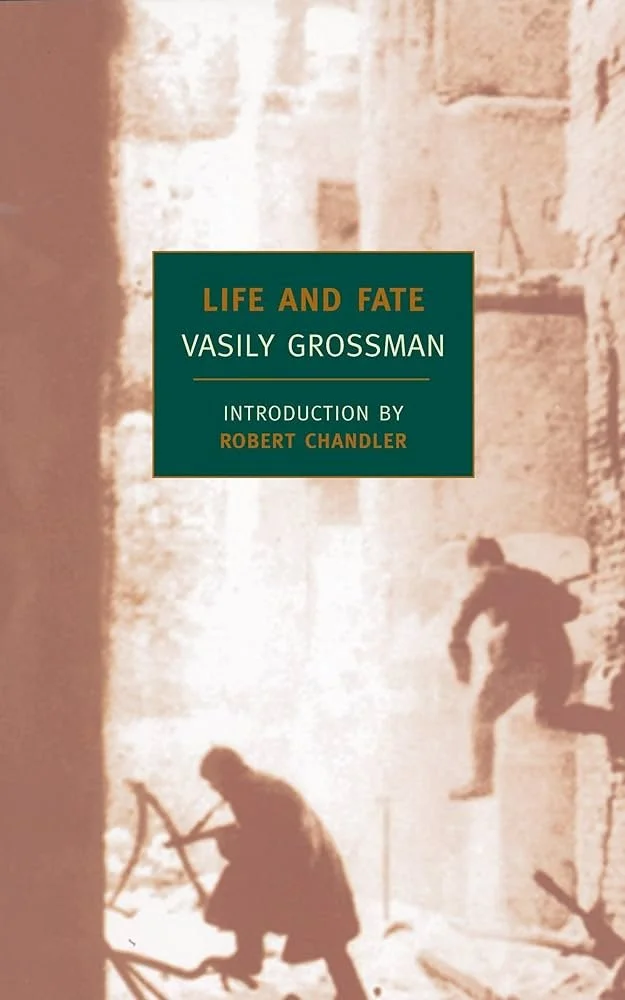
If you know me well, you know I love Russian greats like Dostoevsky and Tolstoy. Their ability to capture the inner workings of the human heart and the condition of mankind is unparalleled outside of the book of Romans. Grossman stands in this vein as the 20th century heir of Russian literary greatness. His novel, Life and Fate, provided “a portrait of an entire age” in the words of his translator. Similar to Tolstoy’s War and Peace, “the life of an entire country is evoked through a number of subplots involving members of a single family.”
The book centers around an extended family and the events of the epic battle of Stalingrad. Grossman’s contemplation of time, communism, war, truth, and mothers unsettled me many times. I found his descriptions of war to be breathtaking, and his relationships between mothers and sons to be gripping. I will never forget reading page 554 depicting the death of a Jewish woman and a boy she had mothered en route to a Nazi concentration camp. Grossman narrates her final thoughts as she feels the boy's life leave his body and then her own. That precious moment haunts me.
I read this book with two great friends this year, Chris Beard and Kyle Knab. I am grateful for the deep conversations we had about life and fate as we read Life and Fate.
For a discussion of the book, check out this episode on Tyler Cowen’s podcast.
5. Everything is Never Enough: Ecclesiastes' Surprising Path to Resilient Happiness by Bobby Jamieson
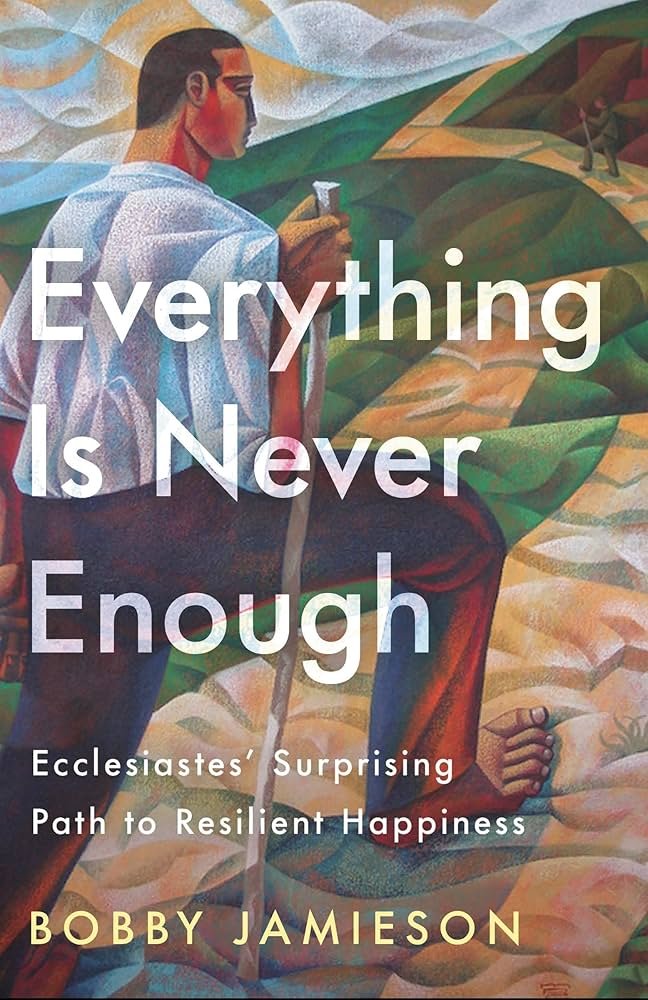
I always perk up at books attempting to unpack Ecclesiastes. Bobby Jamieson does just that with a little help from sociologist Hartmut Rosa and philosopher Byung-Chul Han in his application of Ecclesiastes to the frustrations of our modern culture. Jamieson’s outline of Ecclesiastes was super illuminating and his reflections agitated some good existential questions.
4. The Old Man and the Sea by Ernest Hemingway
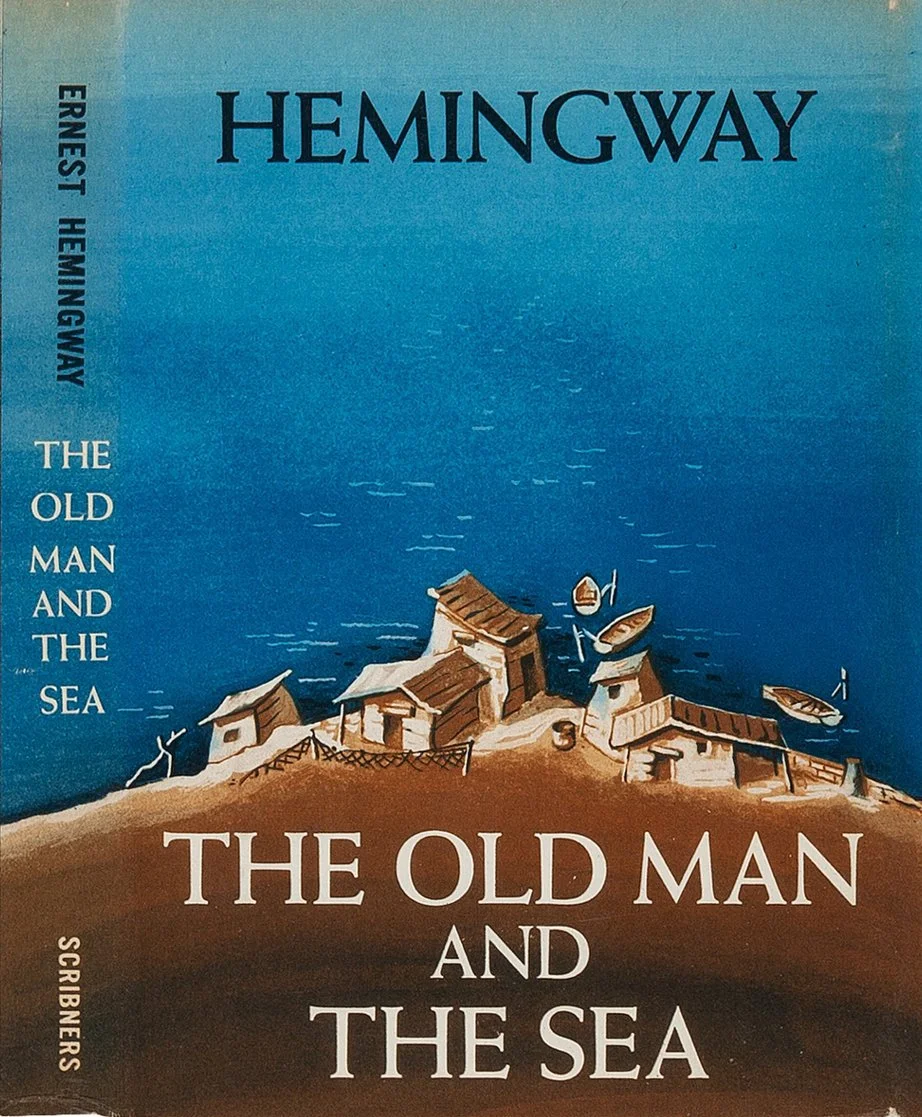
I cannot believe I had never read this Hemingway masterpiece. In 100+ pages, he shoves readers into the sensitivity of thinking about the perseverance great goals in life can produce and how the world can strip your life’s work right off the bone in a matter of minutes. The old man’s quest for the great fish forced me to think about where my treasure is. Thanks for this one, Grace and Josh!
3.1 Rembrandt Is in the Wind: Learning to Love Art through the Eyes of Faith by Russ Ramsey
3.2 Van Gogh Has a Broken Heart: What Art Teaches Us About the Wonder and Struggle of Being Alive by Russ Ramsey
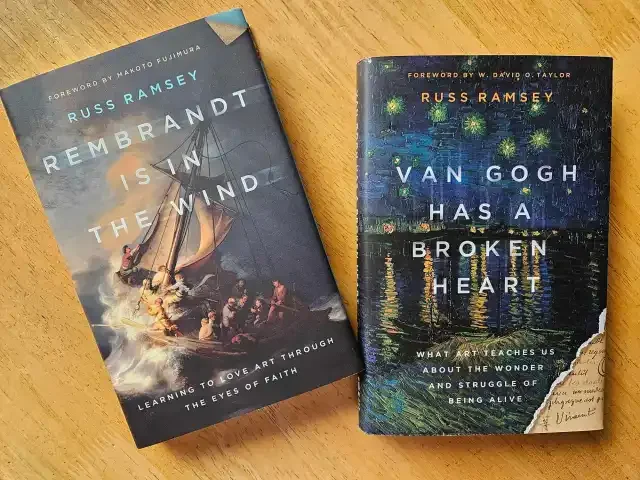
I love art, but I am incompetent at critical evaluation of it. I am always looking for guides to give me the richness of art’s enjoyment that I would miss without their help. Ramsey, a PCA pastor and art critic, is a wise art teacher in these two books. He takes you on a tour of great art, its artists, and connections with or against the things of God down through the centuries. I absolutely loved them.
2. Wise Counsel: John Newton’s Letters to John Ryland Jr. Ed. By Grant Gordon
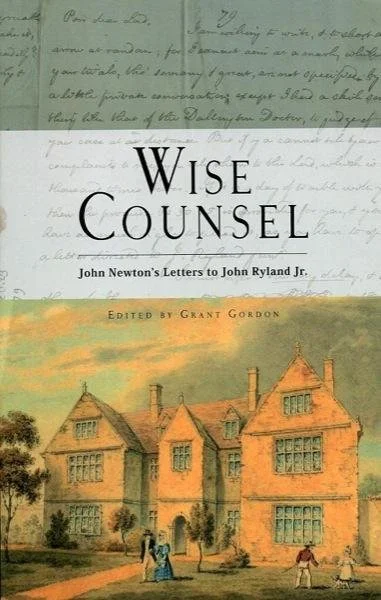
My devotional life the last few months has included the letters of the famous eighteenth century Anglican pastor John Newton to his young friend and mentee, John Ryland Jr. (1753-1825). The English Baptists mentioned in my preamble inspiring my missions’ ambitions included John Ryland Jr, pastor of Broadmead Baptist church in Bristol, England, and head of the Bristol Baptist Academy. Ryland’s father was an influential (and eccentric) pastor in the evangelical community whom Ryland Jr. had a difficult relationship with at times. Newton, a much older man, became a voice of counsel for Ryland on how to honor his father and deal with his father’s real flaws. This exchange of letters led to decades of writings between the two, Newton pastoring Ryland with his pen throughout his ministry. Over eighty letters are included in this collection edited by Grant Gordon. It was incredible to read through their entire relationship from beginning to end. I was pastored by Newton as he pastored Ryland in life and ministry. This one was another gift from the Muras.
1. Wonder Confronts Certainty: Russian Writers on the Timeless Questions and Why Their Answers Matter by Gary Saul Morson
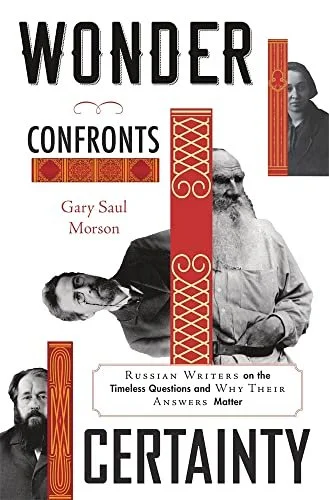
Wonder Confronts Certainty is my favorite kind of book. When a world class scholar at the end of his career attempts to put his or her decades of thought into a single volume, every page will drip with years of wisdom. Gary Saul Morson is probably the leading scholar of Russian literature in America. His famous course on Russian greats at Northwestern University was known as the most popular course on campus. He has translated and interpreted Tolstoy, Doestoevsky, and other Russian masters for fifty years. In Wonder Confronts Certainty, he attempts to capture what he has distilled by summarizing the essence of Russian literature in its deep struggle with the human heart, individuality, morality, and the ideologies it embraced and rebelled against.
I have been sold for years on this claim Morson demonstrates:
Think of it this way: there is an obvious proof that Tolstoy, George Eliot, and some other novelists understood people better than the greatest psychologists. If psychologists knew people as well as these novelists did, they could present portraits of people as believable as Anna Karenina and Dorothea Brooke, but none has even come close. These writers must know something that psychologists still struggle to grasp. The same may be said of their portraits of society (53).
The Russian realists have a particular gift at untangling the depths of the human mind. They can dig deep into us and articulate what we often do not want to admit. Morson’s discussion of Russian depictions of what he calls misperception as an intricate surveillance system of our consciences to excuse ourselves out of refusing what we know is sin is uncanny. My reading of classics like Crime and Punishment and Anna Karenina are deeper now, and their piercing analysis of human life is made richer by Morson’s work.
A while back, Al Mohler interviewed Gary Saul Morson about this book on his podcast, “Thinking in Public.” Check it out here.
TOP FILM, ALBUM, & ARTICLE OF MY 2025
Movie: The Tree of Life
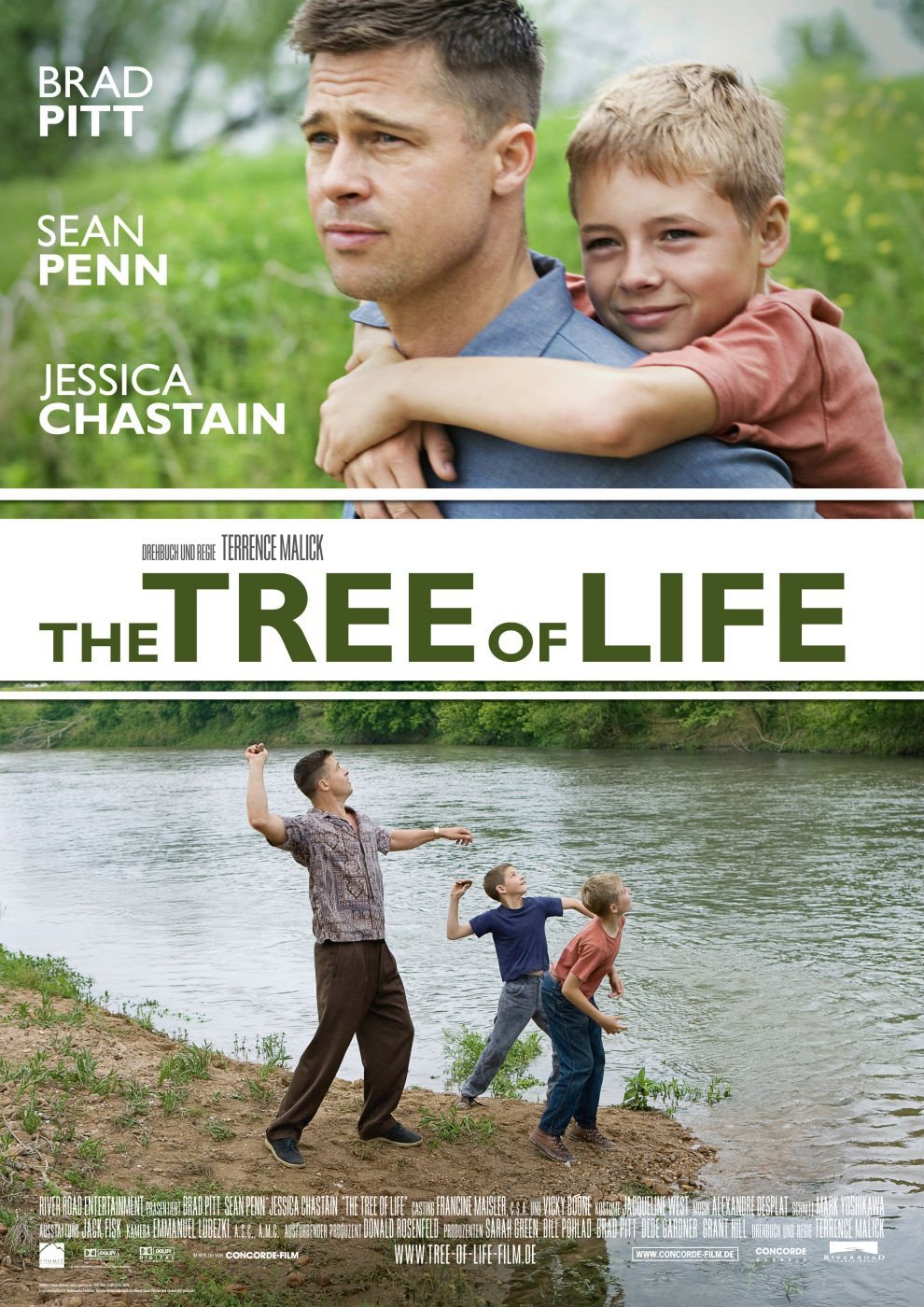
I am late to the game on this 2011 movie written and directed by Terrence Malick. I am mentioning it because it was the most stimulating movie I have ever watched (and rewatched). It is by far the best movie evoking Christian themes ever made with sophistication and symbolism that will take a lifetime to unpack. The first time I watched it, I laid in bed that night overwhelmed by what I just saw. It is an ambitious movie that takes work to contemplate. One of the first books I will read after Christmas is Peter Leithart’s theological reflection on the film: Shining Glory: Theological Reflections on Terrence Malick's Tree of Life. It is safe to say this is now my favorite movie of all time. If you have never seen it, you will probably hate it the first time you watch it, but watch it again and let it grow on you.
Album: Jesus by Jon Guerra
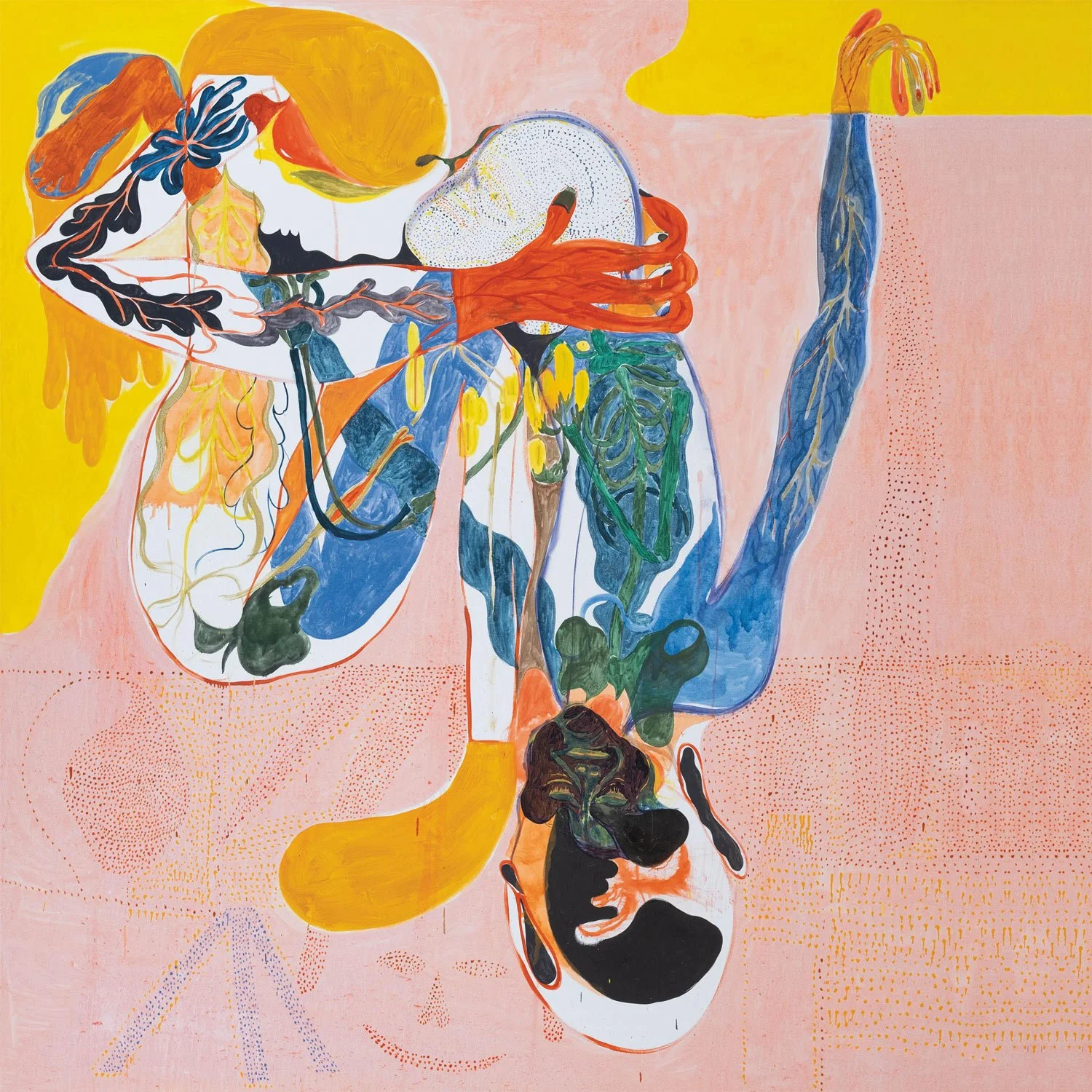
The cover of the Jesus album
Guerra chewed on the truths of Jesus in the gospels throughout this album. I felt Guerra engaging with Jesus in a precious way in these songs. The Jesus album was the soundtrack to my sanctification this year, and I got to hear him play a few of these songs live with my friend and pastor, James Rowell, a couple months ago. In describing the genesis of this album, Guerra said as he reread the gospels afresh he could not put his finger on Jesus, “and that’s the medicine.”
Article: “The Friend: Love Is Not a Big Enough Word” by Matthew Teague (Esquire May 10, 2015)

Matthew Teague and his late wife, Nicole Teague
Trust me. This long form article is worth your time. I wept. I came across it this year and returned to it multiple times. Apparently a movie spawned from this article: Our Friend. I have not seen the film, so I have no clue about its appropriateness.
If you made it to the bottom of this article, and you read the preamble, you are a true friend.